
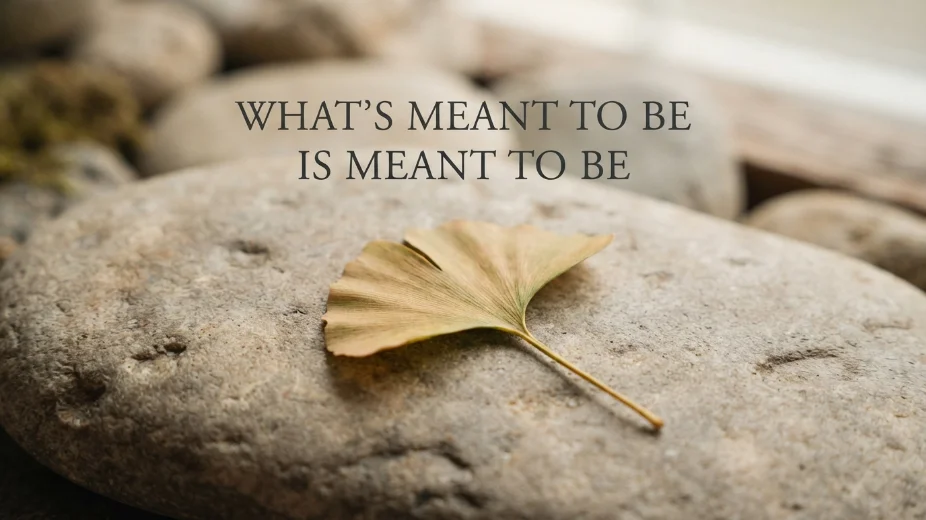
What Does “What’s Meant To Be Is Meant To Be” Mean? (Direct Answer)
The phrase “What’s meant to be is meant to be” means that certain events, relationships, opportunities, or outcomes are destined to happen regardless of obstacles or circumstances. It expresses a belief in fate, destiny, divine timing, or the idea that some things are beyond human control.
People often use this saying to find comfort during uncertainty, heartbreak, disappointment, or major life changes. It suggests that if something truly belongs in your life, it will happen naturally at the right time.
Example:
“I didn’t get the job I wanted, but I believe what’s meant to be is meant to be.”
In simple terms, the phrase encourages acceptance, patience, and trust in the future.
Understanding the Deeper Meaning of “What’s Meant To Be Is Meant To Be”
At first glance, this expression may seem simple, but it carries significant emotional and philosophical meaning.
The phrase is built around the concept of destiny—the belief that some events are predetermined. Many people use it when they want to stop worrying about things they cannot control.
The saying often reflects several ideas:
- Trusting life’s process
- Believing in fate or destiny
- Accepting outcomes gracefully
- Letting go of excessive worry
- Having faith in timing
- Finding peace after disappointment
For some people, the phrase has a spiritual meaning. Others view it as a practical reminder to focus on what they can control rather than obsessing over uncertain outcomes.
The Origin of the Phrase
Although no single person is credited with creating the phrase, the idea behind “What’s meant to be is meant to be” has existed for centuries.
Similar concepts appear in:
- Ancient Greek philosophy
- Religious teachings
- Literature
- Folklore
- Modern self-help discussions
Many cultures have sayings that express similar beliefs:
- “Whatever will be, will be.”
- “Everything happens for a reason.”
- “Trust the process.”
- “What is destined for you will find you.”
The modern version became popular through everyday conversation, inspirational quotes, books, movies, and social media.
When People Commonly Use This Phrase
The phrase is most often used during emotionally significant moments.
Relationships
People say it when discussing love, breakups, reconciliation, or marriage.
Example:
“If we’re supposed to be together, what’s meant to be is meant to be.”
Career Decisions
It can help people cope with job rejections or unexpected career changes.
Example:
“I wasn’t selected for the position, but what’s meant to be is meant to be.”
Personal Goals
Many individuals use the phrase when pursuing dreams that involve uncertainty.
Example:
“I’m giving it my best effort and trusting that what’s meant to be is meant to be.”
Life Challenges
It can provide emotional comfort during difficult situations.
Example:
“The outcome is out of my hands now. What’s meant to be is meant to be.”
Is “What’s Meant To Be Is Meant To Be” About Fate or Personal Choice?
This question sparks ongoing debate.
Some people interpret the phrase as proof that everything is predetermined. Others believe it simply encourages acceptance after making reasonable efforts.
The phrase generally falls somewhere between these two views:
| Perspective | Interpretation |
| Fate-Based View | Events are destined to happen regardless of actions. |
| Religious View | A higher power guides outcomes according to a divine plan. |
| Practical View | Focus on what you can control and accept the rest. |
| Psychological View | The phrase reduces anxiety by promoting acceptance. |
| Personal Growth View | Work hard, but don’t obsess over outcomes. |
Most modern users do not mean that effort is unnecessary. Instead, they believe that after doing their best, they should accept whatever happens.
Emotional Impact of the Phrase
One reason the phrase remains popular is its emotional power.
It Reduces Anxiety
Constantly worrying about the future can create stress. This expression encourages people to release some of that pressure.
It Encourages Acceptance
Not everything goes according to plan. The phrase reminds people that setbacks are part of life.
It Provides Comfort
During difficult times, believing that events unfold for a reason can help people feel more hopeful.
It Promotes Patience
Many opportunities require time. The saying reminds people that timing matters.
How to Use “What’s Meant To Be Is Meant To Be” Correctly
The phrase works best in situations involving uncertainty, hope, or acceptance.
Casual Conversations
Example:
“I’m nervous about the interview, but what’s meant to be is meant to be.”
Family Discussions
Example:
“We’ve done everything we can. What’s meant to be is meant to be.”
Social Media Captions
Example:
“Trusting the journey because what’s meant to be is meant to be.”
Motivational Writing
Example:
“Sometimes the best thing you can do is trust that what’s meant to be is meant to be.”
Tone and Formality of the Expression
Understanding tone is important when choosing this phrase.
| Context | Suitable? | Notes |
| Casual Conversation | Yes | Very common |
| Personal Reflection | Yes | Frequently used |
| Motivational Content | Yes | Positive and encouraging |
| Professional Email | Sometimes | Use carefully |
| Academic Writing | Rarely | Too informal |
| Business Reports | No | Not appropriate |
In professional environments, more neutral alternatives are often preferred.
For example:
Instead of:
“What’s meant to be is meant to be.”
You might write:
“We’ll evaluate the outcome once all factors are considered.”
Common Mistakes When Using the Phrase
Using It to Avoid Responsibility
The phrase should not be used as an excuse for inaction.
Incorrect mindset:
“I won’t prepare because what’s meant to be is meant to be.”
A healthier approach:
“I’ll prepare thoroughly and trust the outcome.”
Using It in Highly Sensitive Situations
In situations involving grief or major loss, the phrase may sound dismissive if used carelessly.
Always consider the emotional context.
Overusing It
Repeating the phrase too often can make communication sound cliché or overly simplistic.
Better Alternatives and Similar Expressions
Sometimes you may want to express the same idea with different wording.
Positive Alternatives
- Everything happens for a reason.
- Trust the process.
- Let life unfold naturally.
- What is meant for you will find you.
- Time will tell.
- The right things happen at the right time.
- Let go and trust the journey.
- What’s destined for you won’t pass you by.
More Professional Alternatives
- We’ll see how things develop.
- The outcome remains uncertain.
- Time will reveal the best path forward.
- We’ll adapt as circumstances evolve.
More Romantic Alternatives
- If we’re meant to be together, it will happen.
- True connections find their way back.
- Love finds a way.
Real-Life Examples of “What’s Meant To Be Is Meant To Be”
Example 1: Relationship
Sarah and Michael ended their relationship because of long-distance challenges. Years later, they reconnected and eventually married.
Many would describe their story with the phrase:
“What’s meant to be is meant to be.”
Example 2: Career Change
An employee was rejected from several positions before finding a role that perfectly matched their skills.
Looking back, they might say:
“The earlier jobs weren’t right for me. What’s meant to be is meant to be.”
Example 3: University Admission
A student was denied admission to their first-choice university but later attended another institution that led to better opportunities.
The phrase often helps people reframe disappointment as part of a larger journey.
Why the Phrase Remains Popular Today
Despite changing trends in language, this expression continues to resonate because it addresses universal human concerns:
- Love
- Success
- Failure
- Uncertainty
- Timing
- Hope
- Acceptance
In today’s fast-paced world, people often seek reassurance when things don’t happen immediately. The phrase offers a simple reminder that not everything can be forced.
Its popularity on social media, motivational blogs, self-improvement content, and everyday conversation demonstrates its lasting appeal.
Frequently Asked Questions
Is “What’s meant to be is meant to be” grammatically correct?
Yes. The phrase is grammatically correct and widely used in conversational English.
What does “What’s meant to be” mean in a relationship?
It means that if a relationship is destined or genuinely right, it will naturally work out over time.
Is the phrase religious?
Not necessarily. Some people use it from a spiritual perspective, while others use it as a general expression of acceptance.
Is it the same as “Everything happens for a reason”?
The two phrases are similar, but not identical. “Everything happens for a reason” suggests purpose behind events, while “What’s meant to be is meant to be” focuses more on destiny or inevitability.
Can I use this phrase in professional communication?
You can, but it may sound informal. More neutral wording is often preferable in business settings.
Does the phrase encourage passivity?
Not when used properly. Most people use it after making an effort and accepting the outcome.
What is another way to say “What’s meant to be is meant to be”?
You could say:
- Trust the process.
- What is meant for you will come.
- Time will tell.
- Let things unfold naturally.
Why do people find comfort in this phrase?
It reduces anxiety about uncertain outcomes and helps people accept situations they cannot control.
Is the phrase optimistic or pessimistic?
Generally, it is considered optimistic because it encourages hope, patience, and trust in the future.
Can the phrase apply to career and life decisions?
Yes. It is commonly used regarding jobs, education, friendships, personal goals, and major life transitions.
Conclusion
The phrase “What’s meant to be is meant to be” expresses the belief that certain events, relationships, and opportunities will unfold as they are supposed to. Whether viewed through the lens of fate, spirituality, psychology, or personal growth, the saying offers comfort during uncertainty and helps people focus on what they can control.
Used thoughtfully, it encourages patience, acceptance, resilience, and trust in life’s timing. Rather than promoting passivity, the healthiest interpretation is simple: do your best, take meaningful action, and accept the outcome with confidence. After all, many people find peace in believing that what’s meant to be is meant to be
